
Apostille in Hong Kong
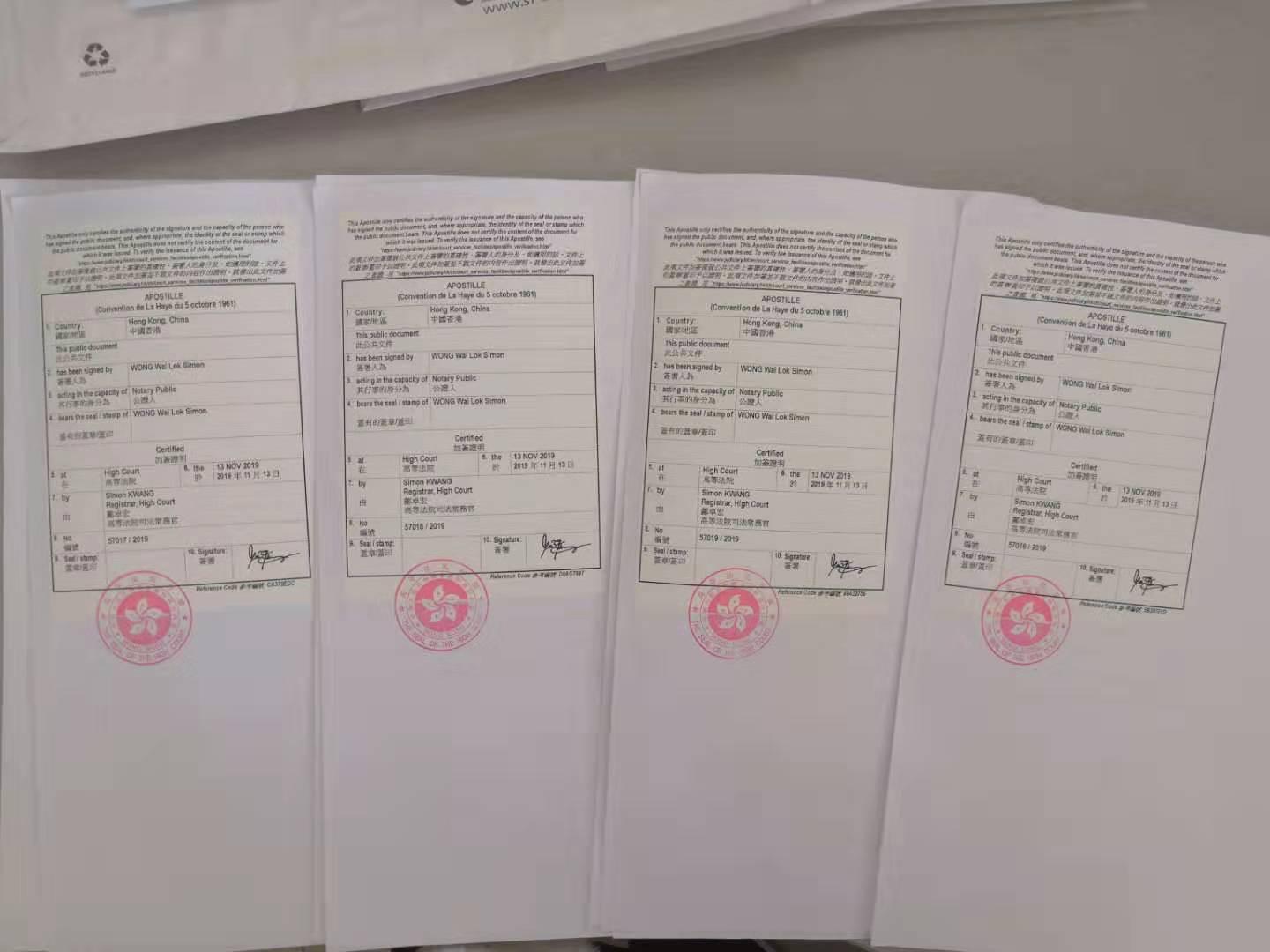
In an increasingly globalized world, a document issued in one country often needs to be legally recognized in another. For documents originating in Hong Kong, this recognition is frequently achieved through a special certificate known as an Apostille. This article provides a comprehensive overview of what an Apostille is, why it is needed, and how the process works in Hong Kong.
What is an Apostille?
An Apostille (from the French word for "marginal note" or "certification") is a certificate that authenticates the origin of a public document . It is issued under the terms of the Hague Convention Abolishing the Requirement of Legalisation for Foreign Public Documents, signed on October 5, 1961.
The primary purpose of an Apostille is to simplify the process of document legalization between countries that are signatories to this Convention. Before the Convention, a document might need to be authenticated by a series of different authorities—such as local notaries, government departments, and foreign embassies—before it would be accepted abroad. The Apostille streamlines this into a single-step certification .
It is crucial to understand what an Apostille does not do. It does not certify the content of the document itself. Instead, it is a certificate that confirms the authenticity of the signature, the capacity in which the person signing the document acted, and the identity of the seal or stamp on the document . It verifies the "signature, seal, and authority" of the official who issued the document (e.g., a Notary Public or a government registrar), allowing the receiving country to trust that the document is genuine.
Hong Kong has been a participant in the Apostille Convention since April 25, 1965, a status that continued after its handover to China . The High Court of the Hong Kong Special Administrative Region is the sole "Competent Authority" designated to issue Apostilles .
The Two Types of Apostille in Hong Kong: Paper vs. Electronic
As part of a global move towards digitalization, Hong Kong has modernized its services. In September 2025, the Hong Kong Judiciary officially launched the e-Apostille service . This means applicants now have a choice between two formats.
· Paper-Based Apostille: The traditional method where a physical certificate is attached to the notarized document and sealed with a wet ink stamp from the High Court . This remains available for those who require or prefer a physical certificate.
· Electronic Apostille (e-Apostille): A digital certificate issued in PDF format, electronically signed by the High Court . This is available for documents that have been digitally signed by a Hong Kong Notary Public who has enrolled in the e-Apostille service. The e-Apostille carries the same legal effect as a paper Apostille and can be verified online through the Judiciary's official e-Register .
Both types are legally equivalent under the Hague Convention . The choice often depends on the requirements of the receiving authority in the destination country.
Which Documents Can Be Apostilled?
The High Court accepts documents for apostille that fall into two main categories :
1. Public Documents Issued by the Hong Kong SAR Government: These include documents bearing the official signature of a government officer. Common examples are:
· Birth and Death Certificates
· Marriage Certificates (specifically those signed by the Deputy Registrar of Marriage)
· Business Registration Certificates
· Certificates of Incorporation from the Companies Registry
2. Documents Signed by a Notary Public or Commissioner for Oaths: This is the most common route for private documents. A Hong Kong Notary Public first verifies the document (e.g., witnessing a signature on a Power of Attorney or certifying a copy of a passport or degree). Once notarized, the document can then be submitted for an Apostille to authenticate the Notary's signature and seal .
The Apostille Process: Step-by-Step
The process generally follows these steps:
1. Step 1: Notarization (If Required). If you have a private document, your first step is to engage a Hong Kong Notary Public. They will verify your identity and the document's authenticity, then notarize it by affixing their signature and official seal. This step is not needed for most original government-issued documents .
2. Step 2: Prepare Your Application. You will need the original notarized or government document. For paper applications, you may need to fill out a form. For e-Apostilles, the enrolled Notary Public will handle the digital submission .
3. Step 3: Submit to the High Court.
· For Paper Apostilles: You (or a representative) must submit the documents in person to the Apostille Service Office at the High Court. An appointment via the e-Appointment System is now required for in-person submissions . Overseas applicants can submit by post or via a local representative .
· For E-Apostilles: Enrolled Notaries Public submit the digitally signed documents through a secure online portal .
4. Step 4: Pay the Fee. The government fee is HK$125 per Apostille application . For paper applications, this can be paid by cash, EPS, Octopus card, FPS, or cheque at the court . For e-Apostilles, payment is made online .
5. Step 5: Processing and Collection. The standard processing time is normally two working days . Once ready, you can collect the paper Apostille in person or have the e-Apostille document emailed to you.
What About Documents for Mainland China and Non-Convention Countries?
It is essential to know that the Apostille is not a one-size-fits-all solution.
· For Mainland China: Although Mainland China acceded to the Apostille Convention in November 2023, documents from Hong Kong destined for Mainland China follow a separate procedure due to the "One Country, Two Systems" principle. They do not receive an Apostille. Instead, they must be attested by a China-Appointed Attesting Officer (CAAO) and then forwarded to the China Legal Service (H.K.) Ltd. for final confirmation and transmission .
· For Non-Convention Countries: If the destination country is not a signatory to the Hague Apostille Convention, the document may require further "legalization" after notarization. This typically involves authentication by the relevant embassy or consulate of that country located in Hong Kong .
The Apostille is a vital tool for anyone needing to use a Hong Kong document in one of the over 120 countries that are members of the Hague Convention . With the recent introduction of the e-Apostille, Hong Kong has made this process faster and more secure. While an Apostille authenticates the official's signature, the foundational work of verifying the document's substance falls to the Notary Public, ensuring that Hong Kong's documents remain trusted and acceptable around the world.